
Road & railway weighing
Truck and railway scales, built and integrated end to end.
Overview
With more than 20 years of experience and over 2,000 installations, PHILRO INDUSTRIAL offers road and railway weighing systems, railcar towing systems and automatic identification for vehicles and railcars, all with a full range of integration and automation options.
Truck scales
Two standard model ranges are available, "Flat" and "U", from 12 to 18 metres long with maximum nominal capacities of 60 or 80 tonnes. The weighing equipment is made in Germany by Minebea Intec GmbH (formerly Sartorius Intec GmbH), while the concrete platforms are produced in PHILRO INDUSTRIAL's own factory under certified quality control.
Truck scales are installed above ground, but the "Flat" models can also be installed in a pit, with the driving surface at ground level.
Photo 1 of 12
Installing a truck scale
Installation and commissioning are very quick thanks to the reinforced concrete modules, which we also make ourselves. Our teams can build the foundations, or the client can build them on their own using the plans we provide.
Data can be sent to the client's computer system over a network cable (Ethernet LAN), wirelessly or through a GSM modem. Every truck scale made by PHILRO INDUSTRIAL can be integrated into any kind of IT network and connected to CRM or ERP software or to an existing access control system on site.
Photo 1 of 8
Related projects
Unattended, semi-automatic or automatic scales
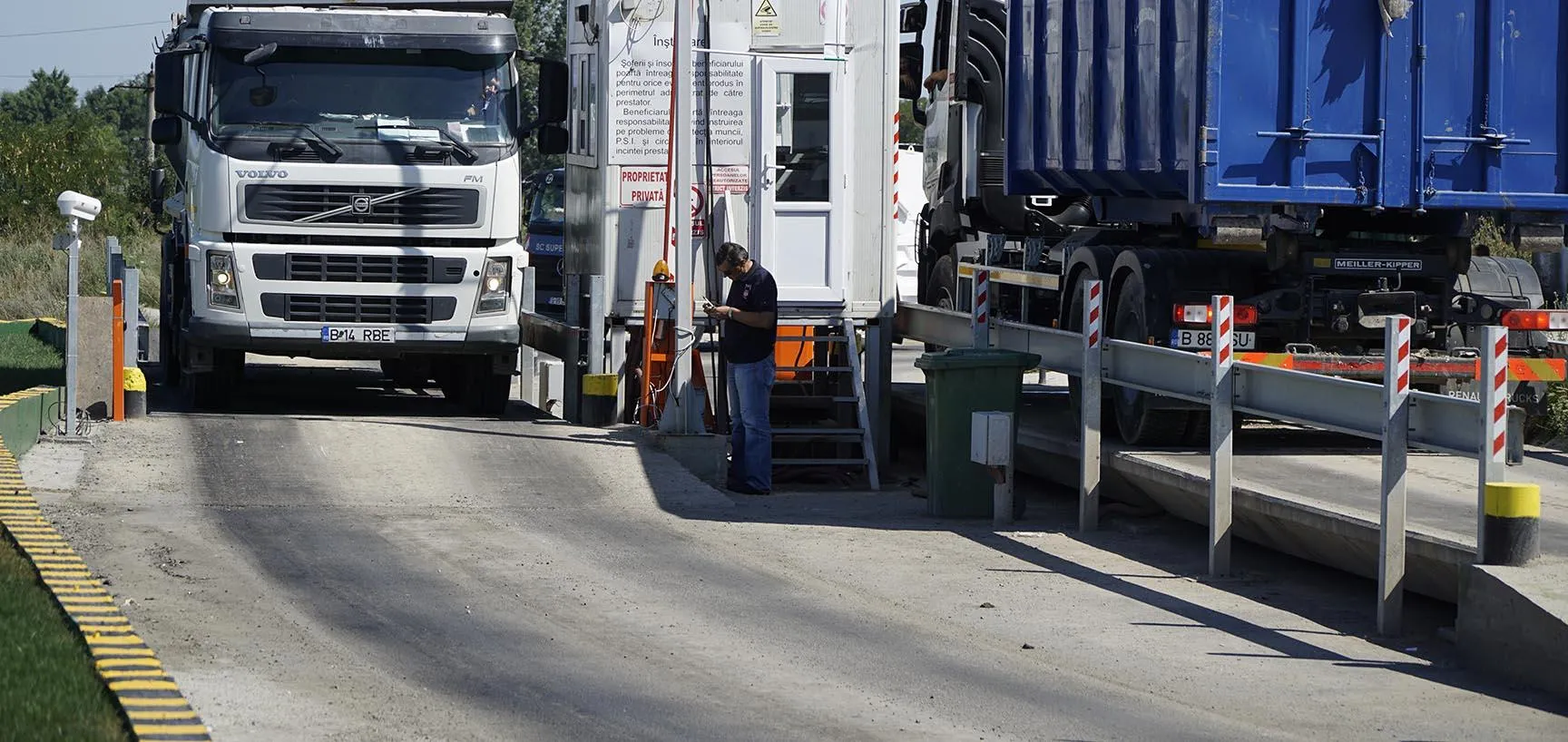
On request, and depending on the conditions on site, PHILRO INDUSTRIAL builds truck scales for semi-automatic operation, which need minimal human supervision, or for fully automatic operation without any supervision at all.
Railway scales
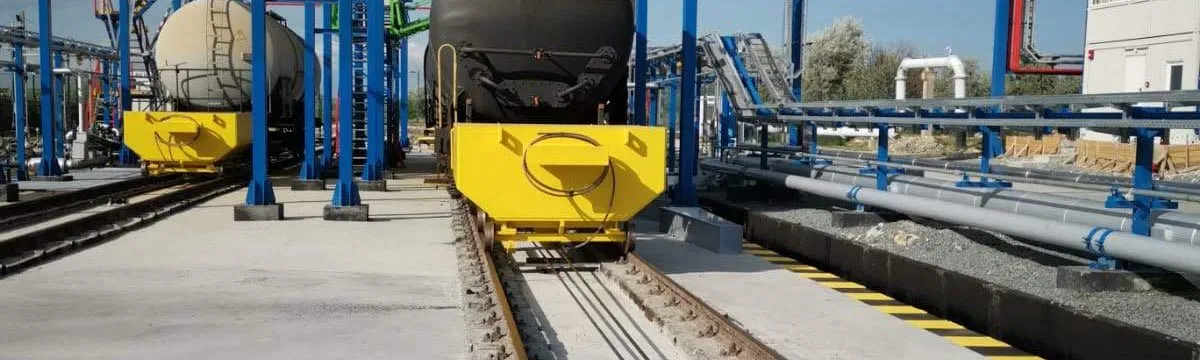
Railcar weighing systems can be configured for lengths of up to 24 m and maximum nominal capacities between 100 and 200 tonnes, depending on the site and the railcars used. Commissioning is very quick thanks to the prefabricated reinforced concrete parts made in our own factory.
The indicator connects to the computer system over Ethernet. Every railway scale made by PHILRO INDUSTRIAL issues weighing tickets and reports that the operator can filter by various criteria. The operating software records, processes and prints the data, can export it to other applications and can be integrated with any of the client's IT systems.
Photo 1 of 8
Dynamic railway weighing
The only manufacturer in Romania of dynamic railway scales certified for the whole product range!
Dynamic railcar weighing pays off at sites with heavy rail traffic. Railcars carrying solid or liquid loads are weighed while moving at 7 to 10 km/h. At the same time, railcars fitted with RFID tags can be identified.
Combined road and railway scales
PHILRO INDUSTRIAL builds combined road and railway weighing systems, with characteristics similar to the systems above.
Photo 1 of 2
FWD (Flat Wheels Detection)
The FWD PHL system developed by PHILRO INDUSTRIAL detects damaged railcar wheels and even grades the damage, starting at speeds as low as 3 km/h. (All other automatic detection systems in use today need trains to run at high speed, relying on the effect becoming more pronounced as speed increases.)
Because it is so accurate even at low speeds, the system can be installed inside industrial sites, on stretches where trains cannot run fast. Railcars with problems can be found and held on site before they are loaded, avoiding returns, transloading and above all the high penalties charged by the infrastructure operator. FWD PHL is also useful for infrastructure operators: installed in shunting areas near stations, its quick response means faulty railcars can be replaced straight away, avoiding the risk of accidents and damage caused by railcars with a defective running gear.
FWD PHL can run automatically or under an operator who signals a passing train and validates and sends the results. A sophisticated algorithm isolates the detected vibrations, correlates them with the speed and load of the railcar and classifies them on a five-level severity scale. The results appear on screen immediately, are stored in a permanent database and are sent over GPRS or Ethernet TCP/IP to the local network or the internet, so the people responsible for traffic safety are alerted at once.